Fishing in Portugal Packing List: What to Bring and What to Buy
Fishing in Portugal Packing List: What to Bring and What to Buy
There is a moment in every fishing trip when the suitcase lies open on the bed and the rod bag leans against the wardrobe, and you have to decide: do I trust the airline with my favourite rod, or do I travel light and rent gear on the other side? Anyone planning fishing in portugal faces that question sooner or later, and the answer shapes everything else in your luggage. The good news is that Portugal rewards both types of traveller. The mainland coast stretches from the cool Atlantic north to the warmer Algarve, with rocky headlands, long sandy beaches, estuary mouths and harbour walls offering plenty of places to cast. The better news is that the paperwork side of the trip can be sorted before you even finish packing, which removes one more item from the pre-departure to-do list.
This packing list is built the way a careful traveller actually packs: category by category, with a note on why each item earns its place and how it connects to the licence you will need. Think of it as a gear plan that doubles as a preparation plan.
Rods, Reels and the Carry-On Question
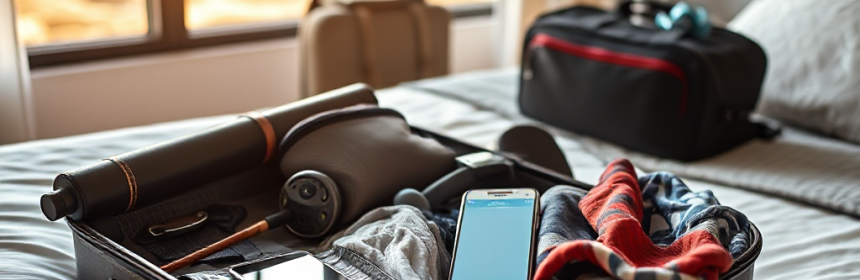
The single hardest packing decision is the rod. A two-piece or three-piece travel rod in a hard tube can usually fly as checked baggage, but tubes are awkward, they attract oversize fees on some carriers, and they are the first thing to go missing when connections are tight. If your trip is short and your fishing is casual, renting locally is often the smarter move. Shops and guides along the Algarve and the Lisbon coast rent serviceable spinning and surf setups, and you avoid the whole question of airline liability.
If you do bring your own rod, pack it the way you would pack a laptop: padded, central, and surrounded by soft items. Reels go in hand luggage whenever possible, because they are dense, expensive and easy to steal. A reel in a padded pouch takes up less space than a pair of shoes and is far harder to replace abroad.
What matters more than the rod itself is knowing what you are allowed to do with it. Recreational sea fishing from the shore or from a boat in mainland Portugal requires a licence issued through the national maritime authority, and the application can be completed online in about three minutes without a NIF or a government portal login. Sorting that out before you pack means the rod has a purpose the moment you land.
Tackle, Terminal Gear and the Weight Allowance
Tackle is where packing discipline pays off. Lures, hooks, swivels, weights and leader material are small, heavy in aggregate, and easy to over-buy. A realistic shore bag for a one-week trip fits in a single small box: a handful of metal jigs for mackerel and bonito, a few soft plastics for bass, some float rigs for garfish, and a selection of leads from 30 to 100 grams depending on whether you are fishing surf or rock.
Buy the bulky, cheap and locally specific items in Portugal. Sinkers, bait, buckets and cool bags are all available in coastal tackle shops, and buying them on arrival saves kilos. Bait in particular is a local purchase: prawns, squid, razor clams and sand eels are sold fresh near most harbours, and carrying them through customs is not an option.
One item worth bringing from home is a compact tackle box with dividers. Portuguese shops sell them, but if you already own one that fits your bag, it keeps hooks and swivels organised and stops small metal items from migrating into your socks.
Before any of this gear touches the water, the licence needs to be in place. A straightforward fishing license application covers recreational sea fishing in mainland Portugal, and having it confirmed before departure means you are not hunting for an office on your first morning. Payment by card, Apple Pay or Google Pay keeps the process simple, and the confirmation sits on your phone alongside your boarding pass.
Clothing, Footwear and Weather Layers
The Portuguese coast is not one climate. The Algarve in summer is warm and dry, but the Atlantic west coast is windier and cooler than most visitors expect, and the northern coast around Porto and Viana do Castelo can be genuinely cold and wet even in shoulder season. Pack layers rather than a single heavy jacket.
Footwear deserves its own line in the packing list. Rock fishing on the Algarve cliffs and the Sintra coast demands grip, and wet volcanic rock is unforgiving. A pair of studded wading boots or firm-soled approach shoes is worth the space. For sandy beaches, a cheap pair of neoprene booties or old trainers will do. Do not fish Portuguese rocks in smooth-soled shoes, no matter how short the walk.
Add a waterproof shell, a warm mid-layer, a hat with a brim, polarised sunglasses and sun cream. The sun reflects off the water even on overcast days, and anglers burn more often than they expect. A small headlamp is useful for dawn and dusk sessions, which are often the most productive.
If you are travelling with a partner who does not fish, the clothing list is also your negotiation tool. A comfortable chair, a book and a good beach mean a half-day session can be a shared outing rather than a solo expedition.
Documents, Licence and Digital Preparation
The documents pouch is small but it is the most important thing in the bag. Passport, travel insurance, booking confirmations and your fishing licence confirmation all belong in one place, ideally with a digital backup in your phone’s wallet or photo library.
Portugal’s recreational sea fishing rules are enforced, and inspectors do check. Carrying proof of your portugal fishing licence is not optional, and a screenshot or PDF on your phone is usually accepted, though a printed copy is a sensible backup if your battery is the kind that dies at the worst moment. Check the size and bag limits for the species you intend to target, because they vary and they change.
Digital preparation also covers the practical side of fishing abroad. Download offline maps of your stretch of coast, save the tide tables for your dates, and note the nearest tackle shop and harbour. Tide range on the Atlantic coast is significant, and a beach that fishes well at high water can be a flat desert at low. A tide app is worth more than an extra lure.
If you are travelling with a non-angling companion, share your plan. Tell them where you will be and when you expect to be back. Rock marks and estuary mouths can be remote, and phone signal is not guaranteed on every headland.
What to Buy on Arrival and What to Leave at Home
The buy-on-arrival list is short and specific. Bait, sinkers, a bucket, a landing net if you are boat fishing, and any species-specific terminal tackle you discover you need. Supermarkets and coastal tackle shops stock the basics, and prices are reasonable. If you are renting a rod, the shop will usually supply a basic rig setup as part of the deal.
The leave-at-home list is longer. Spare rods beyond one backup, heavy cool boxes, waders for a summer trip, and any lure you have not used in two years. Every item you leave behind is an item you do not have to carry through an airport, a hire car and a rocky path down to the water.
The licence itself belongs in the bring-it category, but not as a physical object. It is a confirmation, and the preparation is what matters. Applying online before you travel means your first morning in Portugal is spent rigging up, not queuing. The application takes about three minutes, needs no NIF and no government portal account, and accepts card, Apple Pay or Google Pay, so it fits neatly into the same evening you book your airport transfer.
Close the suitcase with the rod tube strapped in, the reel pouch in the carry-on, the tackle box padded between clothes, and the licence confirmation saved to your phone. Then check the tide table one last time, because the sea does not care about your packing list, but it will reward you for being ready.