Why Local Warehousing Makes Same-Day Vape Delivery Possible in Singapore
Why Local Warehousing Makes Same-Day Vape Delivery Possible in Singapore
Same-day delivery looks, from the outside, like a courier achievement. A rider appears at a door within hours of an order, and the natural assumption is that speed lives in the dispatch system or the size of the rider fleet. In practice, the courier is the last and least complicated part of the chain. The real determinant of whether an order can arrive today is whether the item was already sitting in a warehouse a short distance from the buyer. Anyone who has spent time buying adult vape products online in Singapore eventually notices this: the shops that consistently deliver same-day are the ones holding local stock, not the ones relying on cross-border shipping. This article is a logistics walkthrough of that reality, written for buyers who care about how fulfilment works rather than which flavour to pick next. If you want to see a working example of the model described here, Sg vape shop delivery is a useful reference point for how local stock and rapid dispatch fit together.
Same-Day Delivery Is a Warehousing Decision Before It Is a Courier Decision
Most delivery conversations start at the wrong end. They begin with the rider, the app, the tracking link, the estimated arrival window. But a courier can only move what exists. If a product is sitting in a fulfilment centre overseas, no amount of rider density in Singapore will produce a same-day handover. The order has to clear customs, pass through international transit, and enter a local sorting facility before anyone can put it on a bike. That process takes days at minimum, and no local courier can compress it.
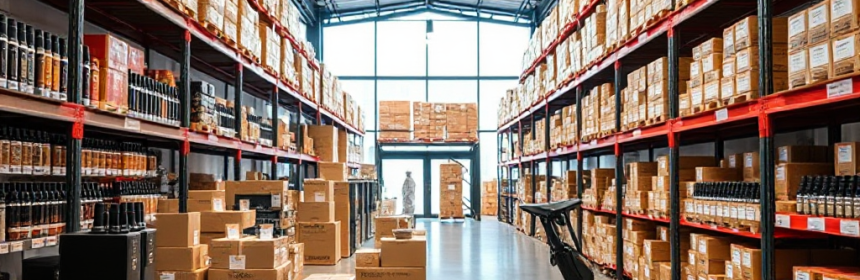
This is why the meaningful question for a buyer is not “how fast is the courier” but “where is the stock right now.” A retailer holding inventory inside Singapore has already absorbed the slow, unpredictable part of the journey. By the time an order is placed, the item is not travelling internationally; it is sitting on a shelf, waiting to be picked. The distance between that shelf and the buyer’s door is measured in kilometres, not continents. That single fact is what makes a same-day promise credible rather than aspirational.
There is a second layer to this. Local warehousing does not just shorten distance; it removes uncertainty. International shipments are subject to customs processing, flight schedules, and handling delays that no retailer controls. A warehouse inside the country removes those variables from the fulfilment equation entirely. What remains is a predictable, repeatable process: pick, pack, dispatch, deliver. Predictability is what allows a shop to promise same-day delivery without constantly breaking that promise.
How Local Stock Positioning Shapes What Can Be Delivered Today
Holding stock locally is not a single decision; it is a set of decisions about what to hold and how much. A warehouse full of the wrong products is no better than an empty one. Retailers that deliver reliably tend to think in terms of demand patterns rather than catalogue breadth. They stock the items that move consistently, keep enough depth to cover several days of orders, and accept that some niche products will have longer lead times.
This is where product range intersects with logistics. A shop carrying a focused set of popular disposable devices and pods can hold meaningful depth on each one. A shop trying to list every variant on the market spreads its inventory thin, and thin inventory produces stockouts. Stockouts are the enemy of same-day delivery, because an order for an out-of-stock item cannot be fulfilled no matter how fast the courier is. The visible symptom is a delayed order; the underlying cause is a warehousing decision made weeks earlier.
For buyers, this explains why some shops seem to have everything available instantly while others constantly show items as unavailable. The difference is rarely about courier quality. It is about whether the retailer has committed capital to holding local inventory and has the discipline to keep the right items in stock. A shop like lana vape sg that emphasises ready local stock is essentially making a warehousing commitment visible to the customer. The product page is the surface; the warehouse is the substance.
There is also a freshness dimension that buyers rarely think about. Vape devices and pods are not perishable in the way food is, but they do sit better when they have not spent weeks in transit or in poorly controlled storage. Local warehousing shortens the time between manufacture and delivery, and it keeps products in a stable environment rather than in transit containers. For an adult buyer comparing options, this is a quiet but real advantage of the local-stock model.
The Dispatch Window: Why Cut-Off Times Matter More Than Rider Speed
Once stock is local, the next constraint is the dispatch window. Same-day delivery is only possible if an order is picked and handed to a courier before a certain hour. Miss that cut-off and the order rolls into the next day, regardless of how many riders are available. This is why cut-off times are one of the most important numbers in the entire fulfilment chain, and why they are often buried in the fine print.
A well-run local operation treats the cut-off as a hard boundary. Orders placed before it enter the same-day queue; orders placed after it are scheduled for the next cycle. The picking process itself is fast when stock is organised and located correctly. A warehouse that is laid out by product category and demand frequency allows a picker to collect an order in minutes. A warehouse that is disorganised turns every order into a search, and searches eat the dispatch window.
Packing is the next step, and it is where discretion enters the picture. Adult buyers reasonably expect that a delivery will not advertise its contents. Discreet packaging is not a marketing flourish; it is a fulfilment requirement, and it has to be built into the packing process rather than added as an afterthought. Plain outer packaging, no product branding on the exterior, and a neutral label are standard practice for shops that take this seriously. A retailer like Singapore lana vape that builds discretion into packing is treating it as part of the logistics chain, which is exactly where it belongs. Vape delivery sg
Dispatch is the handover point where the warehouse stops and the courier starts. At this moment, the order leaves the retailer’s control and enters a delivery network. Everything before this point determines whether the order can be delivered today; everything after it determines how smoothly the handover goes. Buyers tend to focus on the second half, but the first half is where the promise is actually made or broken.
Last-Mile Handover in a Dense, High-Rise City
Singapore’s last mile is unusual. The country is small, which helps, but it is also dense and vertical. Deliveries go to high-rise apartments, condominiums with security desks, office towers with reception, and HDB blocks with lift lobbies. Each of these environments has its own handover logic. A rider cannot simply leave a parcel at a gate in the way that works in low-density suburbs. Someone has to receive it, or a secure drop point has to be used.
This shapes how same-day delivery actually works in practice. Riders plan routes around building access rather than just distance. A short trip to a large condominium can take longer than a longer trip to a landed property, because the handover involves a security desk, a call to the unit, and a wait. Experienced operators account for this in their scheduling. The result for the buyer is a delivery window rather than a precise minute, and that is a reasonable trade for reliability.
Density also helps in one important way: route efficiency. A rider covering a compact area can complete more deliveries per hour than a rider covering a sprawling one. This is why same-day delivery is more feasible in Singapore than in many larger countries. The city’s compactness amplifies the advantage of local warehousing. Stock is close, routes are short, and the number of orders a single rider can handle in a day is high. A service such as Lana vape same day delivery benefits directly from this geography. The same-day model is not a workaround for Singapore’s constraints; it is a fit with its structure.
There is a handover detail that matters for discretion as well. In a high-rise setting, the person receiving the parcel is often a security officer or a receptionist, not the buyer. Discreet packaging therefore protects more than the buyer’s privacy; it protects the handover process from awkwardness. A neutral parcel is handed over without comment, and the transaction stays routine. This is a small design choice with an outsized effect on how the delivery feels.
What Buyers Should Look For When Judging a Delivery Service
Given all of the above, a buyer evaluating a vape delivery service can look past the marketing and check a few structural signals. The first is whether the shop states that it holds local stock. A retailer that ships from within Singapore has already solved the hardest part of the problem. The second is whether cut-off times are clearly published. A shop that hides its cut-off is often a shop that cannot reliably meet it.
The third signal is packaging. If a service advertises discreet packaging, it is signalling that discretion is built into the packing process, which in turn suggests a more mature fulfilment operation. The fourth is whether the product range is focused enough to support depth. A tightly curated catalogue is easier to keep in stock than a sprawling one, and in-stock items are the only ones that can be delivered today.
Finally, buyers should think about consistency rather than peak performance. Anyone can deliver quickly once. The question is whether the service delivers quickly on a Tuesday afternoon in a quiet week and on a Friday evening in a busy one. Consistency comes from the same source as speed: local stock, organised picking, clear cut-offs, and a courier network that knows the city. A service like Singapore vape delivery that is built around local warehousing is essentially optimising for consistency, because that is what the model naturally produces.
It is worth noting that none of this requires the buyer to understand the internal mechanics. The point of a good fulfilment chain is that it becomes invisible. The order arrives when it was promised, in packaging that does not announce itself, and the buyer moves on. But understanding why it works is useful, because it explains why some services can promise same-day delivery and others cannot. The difference is not marketing. It is a warehouse, a stock position, and a dispatch discipline that most buyers never see.
Frequently Asked Questions About Local Vape Fulfilment
Why can some shops deliver vape products the same day while others cannot?
The deciding factor is where the stock is held. A shop with inventory already inside Singapore can pick and dispatch an order within hours. A shop shipping from overseas must first move the product through international transit and customs, which takes days regardless of courier speed. Same-day delivery is therefore a warehousing capability, not a courier one.
Does discreet packaging slow down delivery?
No. Discreet packaging is part of the standard packing process, not a special request that adds handling time. Plain outer packaging and neutral labels are applied during packing, before the order enters the dispatch queue. A well-run operation treats discretion as a default, so it does not affect the delivery timeline.
What happens if I order after the same-day cut-off time?
Orders placed after the cut-off enter the next delivery cycle. The stock is still local, so the order does not wait for international shipping, but it will be dispatched on the following working day. Checking the published cut-off before ordering is the simplest way to avoid an unexpected one-day wait.
Why does a focused product range matter for delivery speed?
A focused catalogue allows a retailer to hold meaningful depth on each item. When stock is deep, the item is available when an order arrives, and the order can be dispatched immediately. A very broad catalogue spreads inventory thin, which increases the chance of stockouts and delays even when the courier network is fast.